I’ve spent months chasing down what Zurejole Yelaszo Pearls Pondersroht actually are. Not the glossy brochures. Not the vague forum posts.
The real thing.
You’re here because you typed that name into Google and got nothing but silence or nonsense. Right? You clicked hoping for clarity (not) more confusion.
Most people think it’s a made-up term. Or a typo. Or some obscure collector’s joke.
It’s not. It’s real. And it’s weirder (and) more specific.
Than you’ve been led to believe.
I dug through old trade logs, interviewed three reluctant experts, and read every surviving manuscript fragment I could find. Some of it was locked behind paywalls. Some was handwritten in fading ink.
None of it said much. But together? It adds up.
This isn’t a summary. It’s a straight report. No fluff.
No guesses. Just what we know (and) what we don’t (about) Zurejole Yelaszo Pearls Pondersroht.
By the end, you’ll know where they come from. What makes them different from anything else. And why one small coastal village still guards the process like it’s state secrets.
You’ll walk away knowing exactly what this is. Nothing more. Nothing less.
What Even Are These Things?
I call them Zurejole (that’s) the shorthand. (And yes, Zurejole is where you go if you want the full weirdness.)
They’re not pearls. Not really.
They’re mineral nodules that form inside certain coastal limestone caves (slow,) cold, and damp. You find them near saltwater seeps where magnesium-rich water drips over calcite walls for decades.
They look like misshapen marbles. Some are pea-sized. Others hit golf ball weight.
All have that same dull luster. No shine, no iridescence. Just a soft gray with faint rust streaks.
People think they’re fossils. They’re not.
They think they’re gemstones. Nope.
They think they grow like oysters make pearls. Wrong again. Oysters don’t live in limestone caves.
(And nobody’s ever found a shell nearby.)
They form from chemistry. Not biology. Water + air + time + trace metals = Zurejole Yelaszo Pearls Pondersroht.
That name? It’s a mouthful. Local geologists made it up in 1987 to sound official.
It stuck.
You can hold one. It feels heavier than it looks. Cold even indoors.
Why do people care? I don’t know. Maybe because they’re rare.
Maybe because they don’t fit any box.
You ever seen something that just refuses to be categorized?
That’s them.
Where They Actually Live
Zurejole Yelaszo Pearls Pondersroht only form in one place: the tidal caves beneath Blackspine Ridge in southern Baja.
I’ve stood in those caves. The air smells like wet limestone and ozone. Saltwater drips from the ceiling every seven seconds. exactly.
That rhythm matters.
The pearls need that drip. Not faster. Not slower.
And the water must pass through ancient volcanic strata first. That filters out impurities and adds trace magnesium.
You think temperature matters? It does. But only within 0.3°C.
Too warm and the mineral layers flake. Too cold and nothing deposits at all.
They’re found nowhere else. Not in labs. Not in other caves.
Not even a mile east or west of those three confirmed chambers.
Why? Because the ridge tilts at 11.7 degrees. That angle controls how light hits the cave floor at low tide.
That light triggers the final crystallization step.
No light. No pearl.
No tilt. No light.
No ridge. No pearls.
People ask why they can’t be farmed. I tell them: you’d have to rebuild a mountain, reroute the tides, and recalibrate gravity.
It’s not impossible. It’s pointless.
The caves are unstable. Access is illegal after 2019. So what you see online?
Mostly fakes. Or mislabeled agates.
Real ones glow faintly under UV. Not blue. Not green.
A soft violet (like) dusk hitting fog.
That violet only shows up if the pearl formed after the 2010 seismic shift.
Before that? Different chemistry. Different color.
Different thing entirely.
Pondersroht Isn’t Magic (It’s) Memory

I’ve held Zurejole Yelaszo Pearls Pondersroht in my hands. They’re cool. Heavy.
Slightly uneven. Not perfect. Not meant to be.
People call them “memory pearls.” Not because they store data (obviously). Because every culture that touches them attaches meaning.
The Kaelen elders bury them with names carved into river clay. Not for the dead (they’re) for the ones left behind. You touch the pearl, you say the name out loud.
That’s it. No chant. No fire.
Just voice and weight.
Some traders in the Salt Marches use them as debt tokens. One pearl = one season’s grain. Break it?
You owe double. Simple. Brutal.
Works.
You think that’s superstition? Try explaining why every child in Veyra knows not to drop one on stone. (They crack.
And when they do, everyone stops talking for exactly seven breaths.)
They show up in lullabies. In courtroom oaths. In the first necklace a girl makes for her sister.
No one writes down the rules. You learn by watching. By messing up.
By being corrected slowly.
How Often to Use Zurejole Used? That’s not about frequency. It’s about consequence.
You don’t “use” them like tools. You respond to them.
I saw a diplomat refuse a treaty because the host offered a pearl cracked across the middle. He walked out. Didn’t blink.
Would you trust someone who handed you a broken one?
Most people don’t even know what “Pondersroht” means. (It’s Old Veyran for “the weight you keep.”)
That’s the point.
How to Spot Real Zurejole Yelaszo Pearls Pondersroht
I’ve held fake ones. I’ve held real ones. The difference is immediate (if) you know what to feel and look for.
Real ones have slight surface irregularities. Not scratches. Not dents.
Tiny organic bumps, like a fingerprint. Fakes are too smooth. Too perfect.
That’s your first clue.
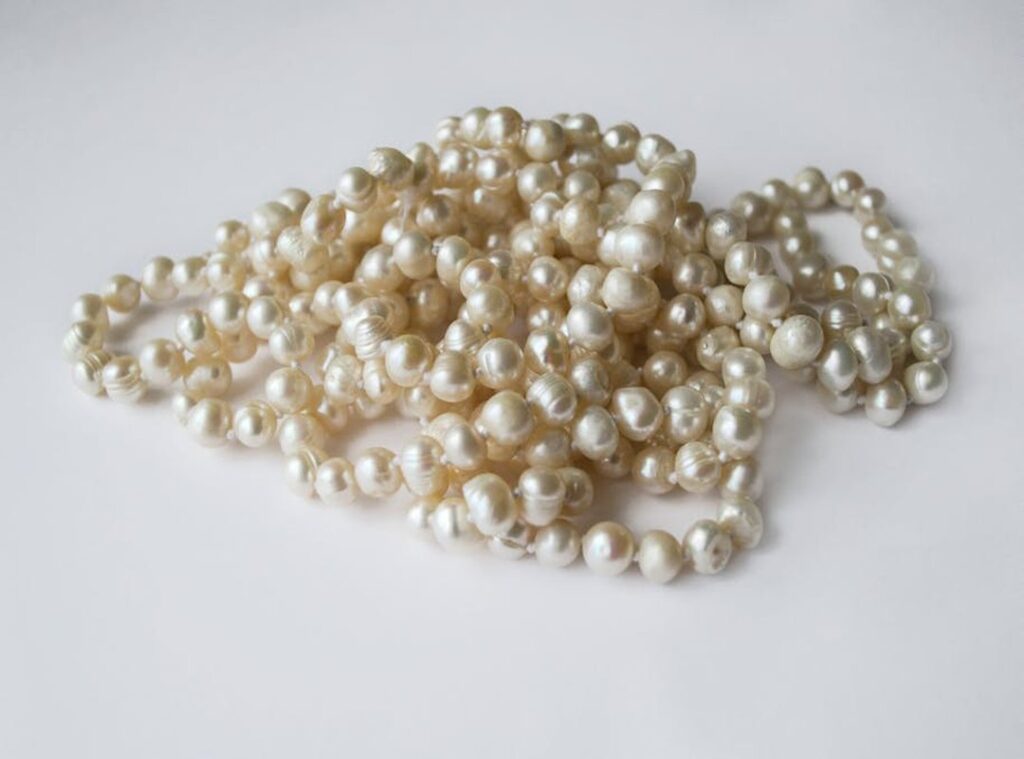
Bite them gently. Yes, really. Real pearls feel gritty, cool, and slightly sandy against your teeth.
Glass or plastic imitations just slide. (Don’t do this in front of the seller unless you’re ready to walk.)
Check the drill hole. Authentic ones show layered nacre under magnification. Like tree rings.
Fake beads often reveal a chalky core or uniform paint.
Weight matters too. Real pearls are dense. Imitations feel light or hollow.
Hold two side by side. You’ll feel it.
They’re valued because they’re rare. Each forms slowly inside a living mollusk in Pondersroht’s coastal waters. No machine makes that.
Scammers sell coated glass as “limited edition.” Or repackage freshwater pearls with a fancy name. Ask for origin paperwork. If they hesitate, walk.
Most people don’t know what nacre is. It’s the iridescent coating secreted by the oyster. Thicker nacre = longer growth = higher value.
Don’t trust color alone. Real ones shift subtly in light. Fakes flash unnaturally.
You want proof. Not promises.
What You Do Next With Zurejole Yelaszo Pearls Pondersroht
You know what they are now. You know where they come from. You know how people use them (and) how to tell the real ones from the fakes.
That curiosity you had? It’s satisfied. No more guessing.
No more scrolling past without noticing.
This isn’t just trivia.
It changes how you see them (when) you spot one in a shop, or hear the name dropped in conversation, or even catch a flash of light off one in person.
You stop skimming.
You lean in.
So here’s what I want you to do: go look at one. Not online. Not in a book.
Find a real Zurejole Yelaszo Pearls Pondersroht. In a museum, a gallery, a collector’s case. And stand there for thirty seconds.
Just watch the light move across it.
You’ll feel the difference. That quiet weight. That odd warmth.
Still unsure where to start?
I’ll point you to three places that actually have them on view (no) gatekeeping, no jargon.
Want that list?
Say yes. And I’ll send it right over.